Closing Costs Made Simple: How Much They Are and How to Plan for Them
Nov 24, 2025

Buying a home comes with plenty of moving pieces, but closing costs are the one line item that catches almost every first-time buyer off guard. You’re already focused on getting pre-approved, comparing homes, and wrapping your head around interest rates — then suddenly there’s an extra 2–5% of the purchase price due at the finish line.
If you’re wondering, “Okay… but how much are closing costs, really?” or trying to make sense of all the different fees, you’re not alone. These numbers feel confusing because nobody explains them clearly (and most online tools list everything using confusing jargon).
So, let’s break it down in simple terms. By the end of this guide, you’ll know exactly what closing costs are, how much to expect, and how to plan for them without the stress.
What Closing Costs Actually Are (and Why They Exist)
When you hear “closing fees,” think of them as all the final steps required to legally transfer the home into your name and finalize your loan.
They usually fall into four buckets:
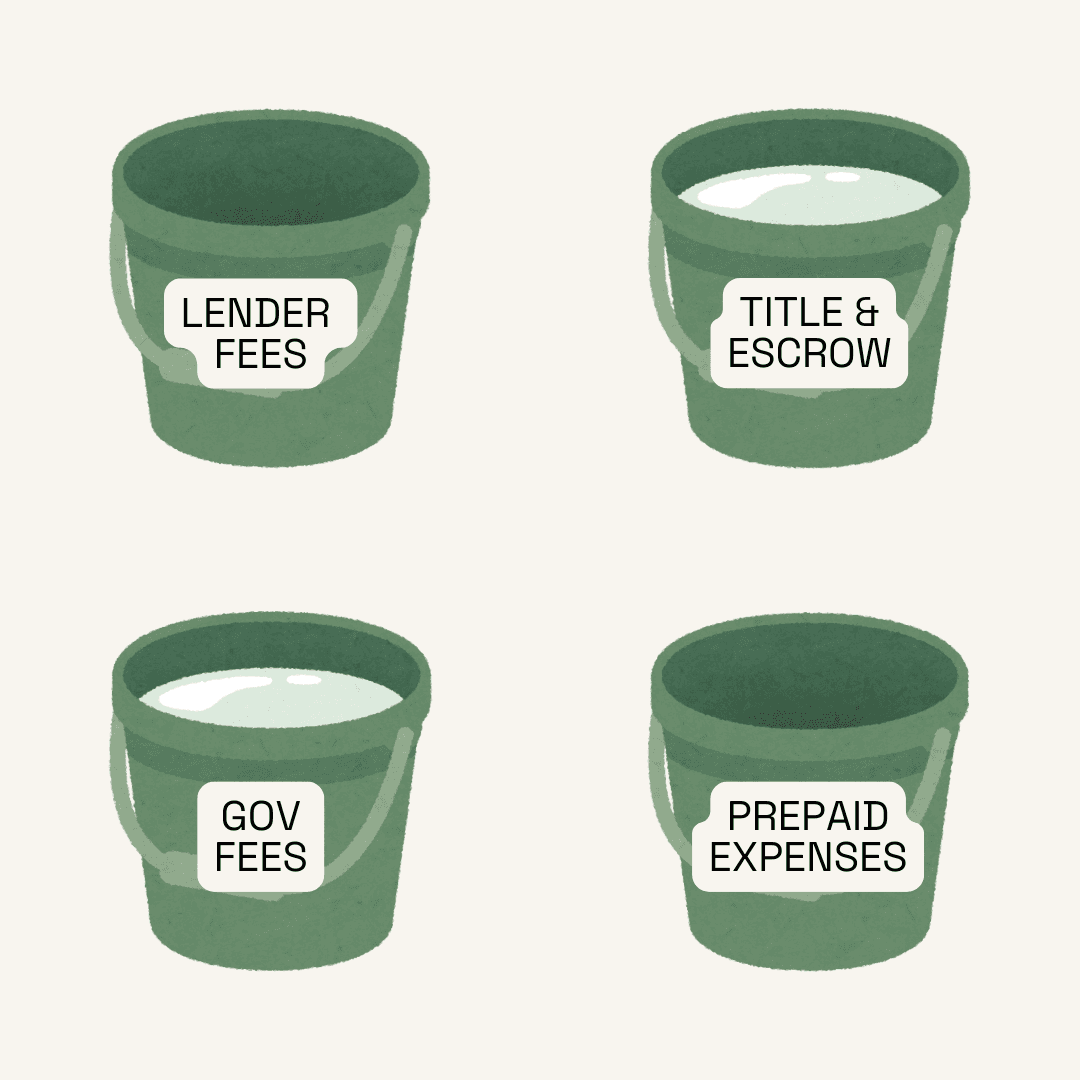
1. Lender fees
Costs tied to the loan itself, like:
Origination fees
Underwriting
Credit report
Appraisal
These are the “cost of doing business” with your lender (but some of them are negotiable).
2. Title & escrow fees
This includes:
Title search (to confirm the home is legally clear to buy)
Title insurance
Escrow service fees (the company that manages the actual closing process)
Title fees vary widely depending on where you live.
3. Government fees
These cover local costs like:
Recording the deed
Transfer taxes (in some states or counties)
4. Prepaid expenses
These aren’t technically fees — they’re “prepayments” to set up your loan and homeowner responsibilities:
Property taxes
Homeowners insurance
Daily interest between closing day and your first mortgage payment
These add up quickly, but they’re normal and expected.
How Much Are Closing Costs? The Real Range to Expect
Here’s the part everyone wants to know:
Most buyers pay between 2% and 5% of the purchase price in closing costs.
A quick real example:
Purchase price: $300,000
Estimated closing costs: $6,000–$15,000
That’s a wide range, but several things affect it:
Your state and county (some areas have higher taxes)
Your lender’s fees
The loan type (FHA loans tend to have higher upfront fees)
Your insurance + tax rates
Any optional add-ons, like discount points (paying to lower your interest rate)
This is why one buyer might pay $7k while another pays $12k. It's because the local and lender variables make a big difference.
How to Calculate Your Closing Costs Step by Step
If you want to run your own estimate, here’s the simplest way to do it:
1. Start with the 2–5% rule
This gives you a quick baseline for planning.
2. Check your Loan Estimate (after pre-approval)
Your lender will provide a document with itemized fees.
You don’t need to understand every line. Just look at:
“Loan Costs”
“Other Costs”
“Cash to Close”
3. Estimate your prepaid items
This varies by season and location. Typically:
6 months of taxes (held in escrow)
Full first-year homeowners insurance
Daily interest
4. Add in optional charges
This includes:
Discount points
Additional inspections
Rate locks
These aren’t required, but they impact the total.
5. Re-calculate once you’re under contract
Your lender will send a Closing Disclosure before closing with your final numbers.
This is the best moment to compare estimates and ask questions.
What You Can and Can’t Negotiate
You actually have more negotiating power than most buyers realize.
Things you can negotiate:
Lender fees
A new lender might match or beat someone else’s costs.Title services
Some states let you choose your title company.Seller credits
A seller can cover a portion of your closing costs.Discount points
Decide whether paying to lower your rate is worth it.
Things you can’t negotiate:
Transfer taxes
Recording fees
Prepaid taxes and insurance
Appraisal fee (usually fixed)
Everything else? Worth asking about.
How to Plan for Closing Costs Without Surprises
Here’s how to budget with confidence:
✔️ Add closing costs to your savings goal upfront
Most buyers only save for the down payment — that’s how people get blindsided.
✔️ Ask lenders for a fee worksheet early
You’re allowed to compare lender fees. Some are way higher than others.
✔️ Estimate high at first
Plan for the upper end of the 2–5% range.
It’s much better to be pleasantly surprised than scrambling for cash.
✔️ Think strategically about seller credits
In slower markets (or with fixer-uppers), sellers are more flexible.
✔️ Check if you qualify for assistance
Grants, lender credits, or state programs can reduce your cost to close.
Common First-Time Buyer Mistakes Around Closing Fees
These happen all the time:
Only budgeting for the down payment
Not reviewing the Loan Estimate
Assuming “prepaids” are optional (they aren’t)
Forgetting about insurance and taxes
Not comparing lender fees before choosing one
Thinking everything is negotiable (sadly, no)
Avoid these, and closing day becomes much less chaotic.
How Entitled Helps You Understand (and Reduce) Closing Costs
Most tools describe closing costs in the most confusing, lender-friendly way possible. Entitled flips that.
With Entitled, you can:
Upload your Loan Estimate or Closing Disclosure and get a simple breakdown
Compare lender fees to see if something looks high
Ask specific questions like:
“Is my lender overcharging me?”
“Are these numbers normal in my state?”
“How do I negotiate closing fees?”
Get a personalized checklist based on your loan type and budget
No jargon. No bias. No hidden agendas. Just the clarity that you need in order to make confident choices.
Final Thoughts
Closing costs don’t have to be stressful. Once you know what to expect (and how to calculate everything), the entire homebuying process feels so much more manageable.
If you’re looking at a Loan Estimate right now or trying to figure out whether your fees look normal, you can always ask Entitled:
“Can you help me understand my closing costs?”
And we’ll walk through it with you, step by step.
Heads up: This isn’t legal or financial advice—just helpful info to make things make more sense.